
View cart “Eminent Poetesses of Persian-Anu Dhawan” has been added to your cart.
Sale!

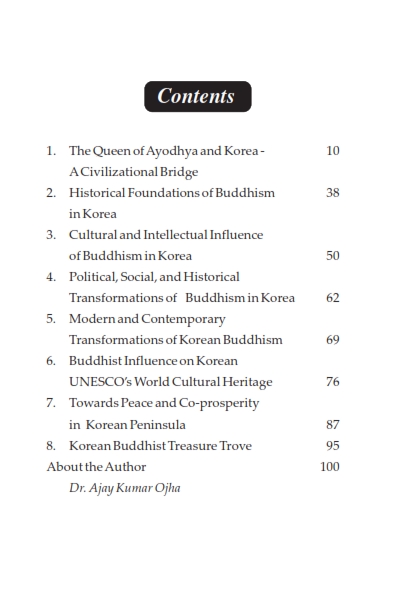

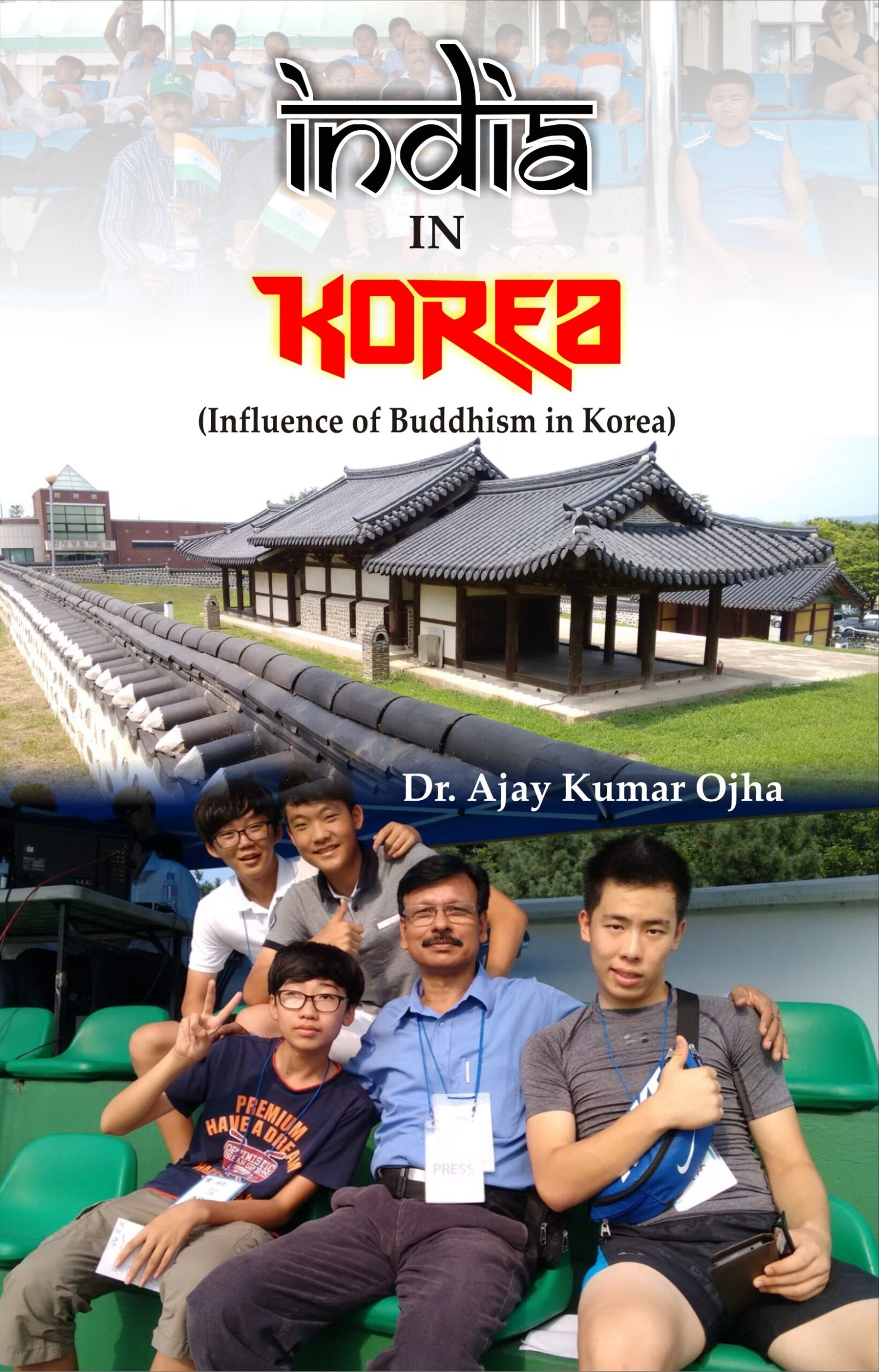
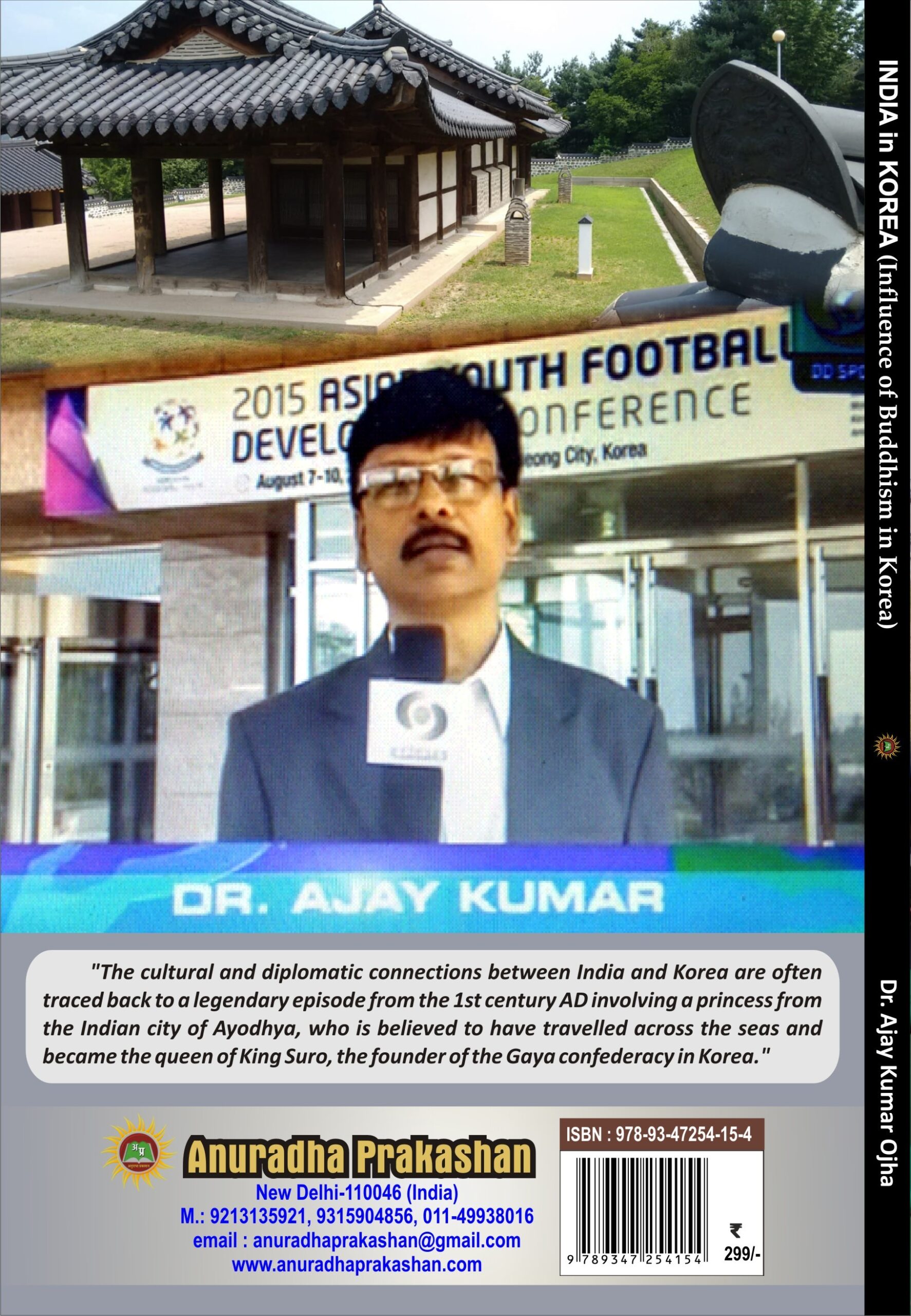
India In Korea : Influence of Buddhism in Korea.
Category:
The question may be asked, "Why this book "India in Korea?" How 'India' can be in Korea that is South Korea that is the Republic of Korea (ROK)? Here India means Indianness, influence of India's culture in Korea, impact of Buddhism in Korea. Many of South Korea's 12 UNESCO World Heritage sites are Buddhist, showcasing a profound, deep, intense, long-standing religious tradition. Some of the important sites include the 8th century Seokguram Grotto and Bulguksa Temple, the Haeinsa Temple Janggyeong Panjeon (housing the Tripitaka Koreana, and the "Sansa" mountain monasteries (inscribed in 2018), which represent active centres of Seon Buddhism.
But again another question may crop up influence of Buddhism may be seen in other countries also such as Thailand, China, Myanmar, Japan, Vietnam, Cambodia, Sri Lanka, South Korea then why "India in Korea", why not in other Buddhist influenced countries?
For finding the answer to the above raised questions I have to rewind myself to the eighties of the 20th century. I was admitted into MA (Sociology) programme in 1980 in Jawaharlal Nehru University, Delhi. I have done my MA, M.Phil and later on Ph.D in Sociology from JNU.
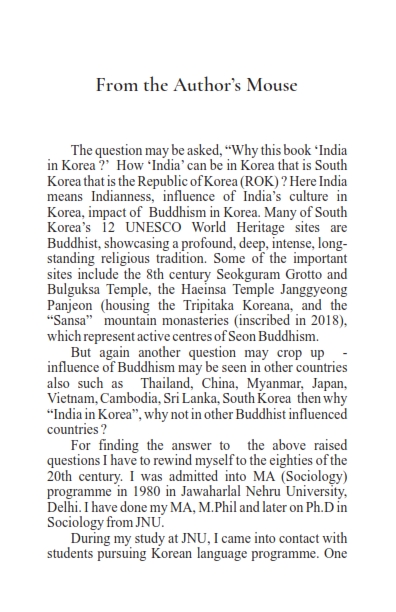
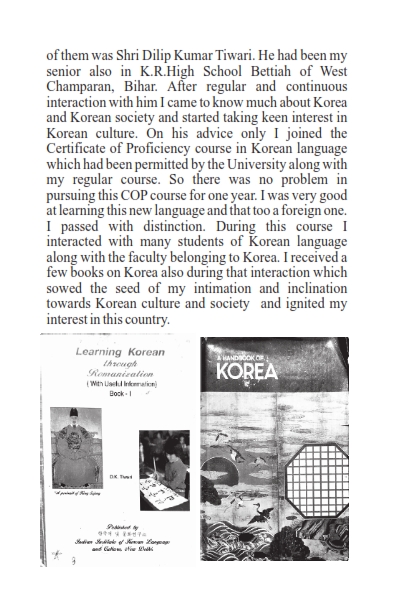
During my study at JNU, I came into contact with students pursuing Korean language programme. One of them was Shri Dilip Kumar Tiwari. He had been my senior also in K.R.High School Bettiah of West Champaran, Bihar. After regular and continuous interaction with him I came to know much about Korea and Korean society and started taking keen interest in Korean culture. On his advice only I joined the Certificate of Proficiency course in Korean language which had been permitted by the University along with my regular course. So there was no problem in pursuing this COP course for one year. I was very good at learning this new language and that too a foreign one. I passed with distinction. During this course I interacted with many students of Korean language along with the faculty belonging to Korea. I received a few books on Korea also during that interaction which sowed the seed of my intimation and inclination towards Korean culture and society and ignited my interest in this country.
₹299.00 ₹295.00
The question may be asked, “Why this book “India in Korea?” How ‘India’ can be in Korea that is South Korea that is the Republic of Korea (ROK)? Here India means Indianness, influence of India’s culture in Korea, impact of Buddhism in Korea. Many of South Korea’s 12 UNESCO World Heritage sites are Buddhist, showcasing a profound, deep, intense, long-standing religious tradition. Some of the important sites include the 8th century Seokguram Grotto and Bulguksa Temple, the Haeinsa Temple Janggyeong Panjeon (housing the Tripitaka Koreana, and the “Sansa” mountain monasteries (inscribed in 2018), which represent active centres of Seon Buddhism.
But again another question may crop up influence of Buddhism may be seen in other countries also such as Thailand, China, Myanmar, Japan, Vietnam, Cambodia, Sri Lanka, South Korea then why “India in Korea”, why not in other Buddhist influenced countries?
For finding the answer to the above raised questions I have to rewind myself to the eighties of the 20th century. I was admitted into MA (Sociology) programme in 1980 in Jawaharlal Nehru University, Delhi. I have done my MA, M.Phil and later on Ph.D in Sociology from JNU.
During my study at JNU, I came into contact with students pursuing Korean language programme. One of them was Shri Dilip Kumar Tiwari. He had been my senior also in K.R.High School Bettiah of West Champaran, Bihar. After regular and continuous interaction with him I came to know much about Korea and Korean society and started taking keen interest in Korean culture. On his advice only I joined the Certificate of Proficiency course in Korean language which had been permitted by the University along with my regular course. So there was no problem in pursuing this COP course for one year. I was very good at learning this new language and that too a foreign one. I passed with distinction. During this course I interacted with many students of Korean language along with the faculty belonging to Korea. I received a few books on Korea also during that interaction which sowed the seed of my intimation and inclination towards Korean culture and society and ignited my interest in this country.
We have put a lot of focus on making sure the items get delivered to our customers as quickly as possible. We offer free Shipping all over India.
Delivery Time: 10-15 business days
Standard delivery items typically arrive within 2-5 days. Any specific item may take upto 10-15 days to arrive. Please allow atleast 15 days before enquiring about lost or missing items.
In case the delivery is required within a specific time period, it is necessary to mention about it at the time of placing the order.
Please allow additional time for your orders to arrive over the bank holiday weekends. We suggest allowing an additional 2-3 days for your packages to arrive to allow for delays within the mail.
It is up to you to make sure that your address details are entered correctly and accurately. We cannot be responsible for delivery problems caused by inadequate address details.
If you need help with your order, please write to us at anuradhaprakashan.official@gmail.com
Related products
-
Sale!

Rise & Thrive
₹500.00₹499.00 -
Sale!
HAPPINESS UNRAVELLED
₹400.00₹350.00 -
Sale!

ZILLION MILES and nowhere to go Staple Bound
₹200.00₹190.00 -
Sale!

GREAT SUFI POETS OF THE PUNJAB
₹1,800.00₹1,750.00